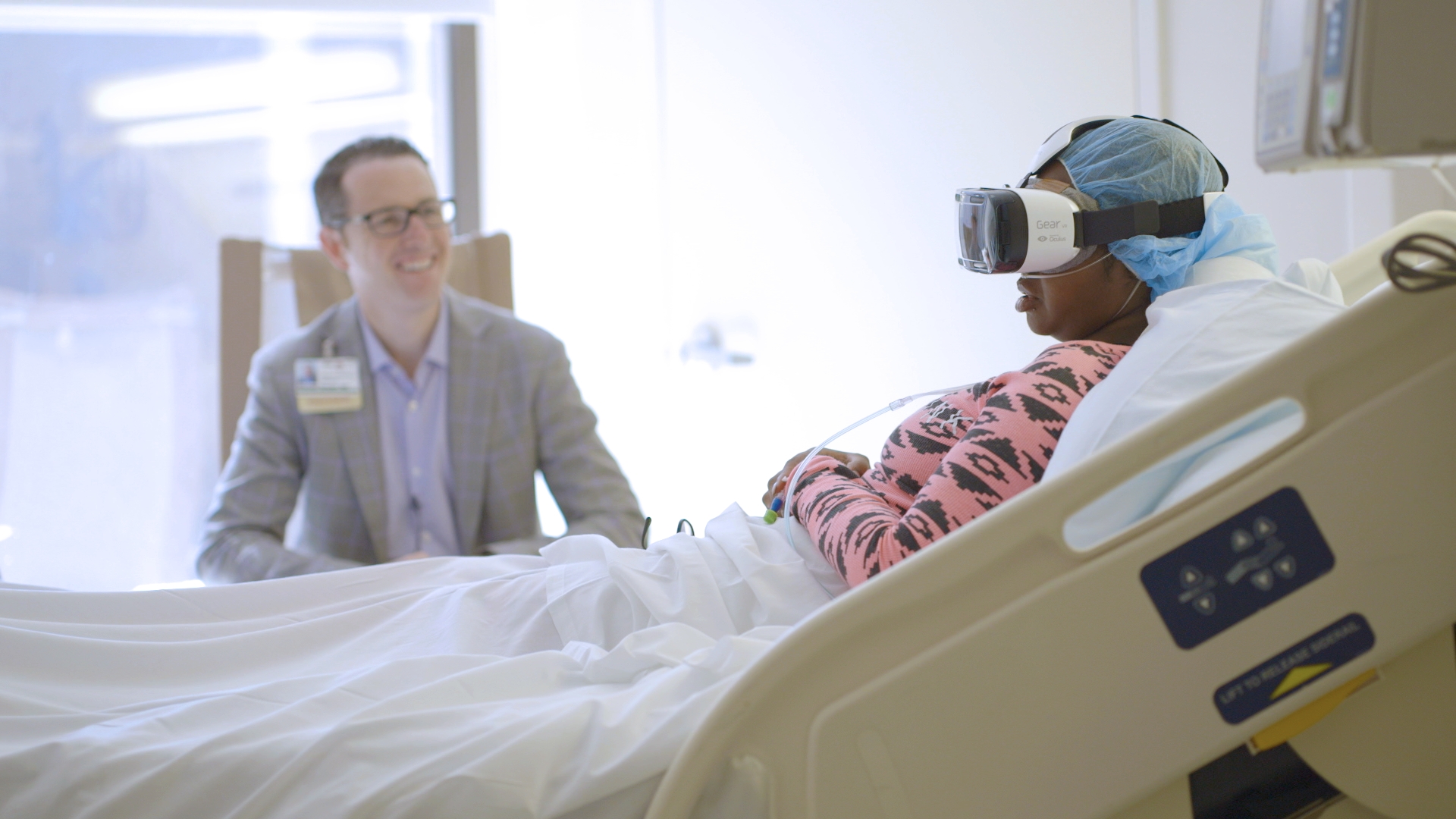
In March, the Cedars-Sinai hospital organized the second Virtual Medicine Conference in Los Angeles. While we could not be physically present this year, the Dolphin Swim Club was highlighted by the director of Health Services Research (and GI doctor) Dr Brennan Spiegel. In an introductory keynote speech, he explained our current understanding of pain and anxiety and the healing effects of Virtual Reality therapy, using various examples, including the Dolphin Swim Club.
Counteracting the ruminating mind
Using Wild Dolphin VR as an example, Dr Brennan Spiegel explains Virtual Reality’s ability to counteract the ruminating mind. He explained that a Virtual Reality experience is like taking a psychedelic. It has the ability to temporarily dissolve the ego-self, allowing insights that normally would not receive mind space.
Dr Brennan Spiegel: ‘We use the 360 video content of the Dolphin Swim Club all the time in our patients. Just recently I had a patient who was hospitalized for abdominal pain and anxiety. She had had every test: she had had an endoscopy, a CT scan, a blood test… And everything was normal. We showed her the Wild Dolphin VR experience. And after about four minutes she said… “I think I know why I have this pain. It’s my brother. He had stomach cancer and he died. And I’m sure I do too, and I’m going to die like he did.” And I said: “but we’ve been in your stomach, you don’t have stomach cancer.” And she said: “I know that, but I have not been willing to accept that. These dolphins are telling me I need to. I could have been on the couch for a year and I wouldn’t have come to this conclusion.” It’s remarkable! We’ve seen this over and over again. It doesn’t work with all people and all times. But when it works, it works.’
Interested in the full keynote? You can watch it here.
Do you want to know more about Virtual Reality in healthcare? You can read more about its healing effects on our Medical VR page.
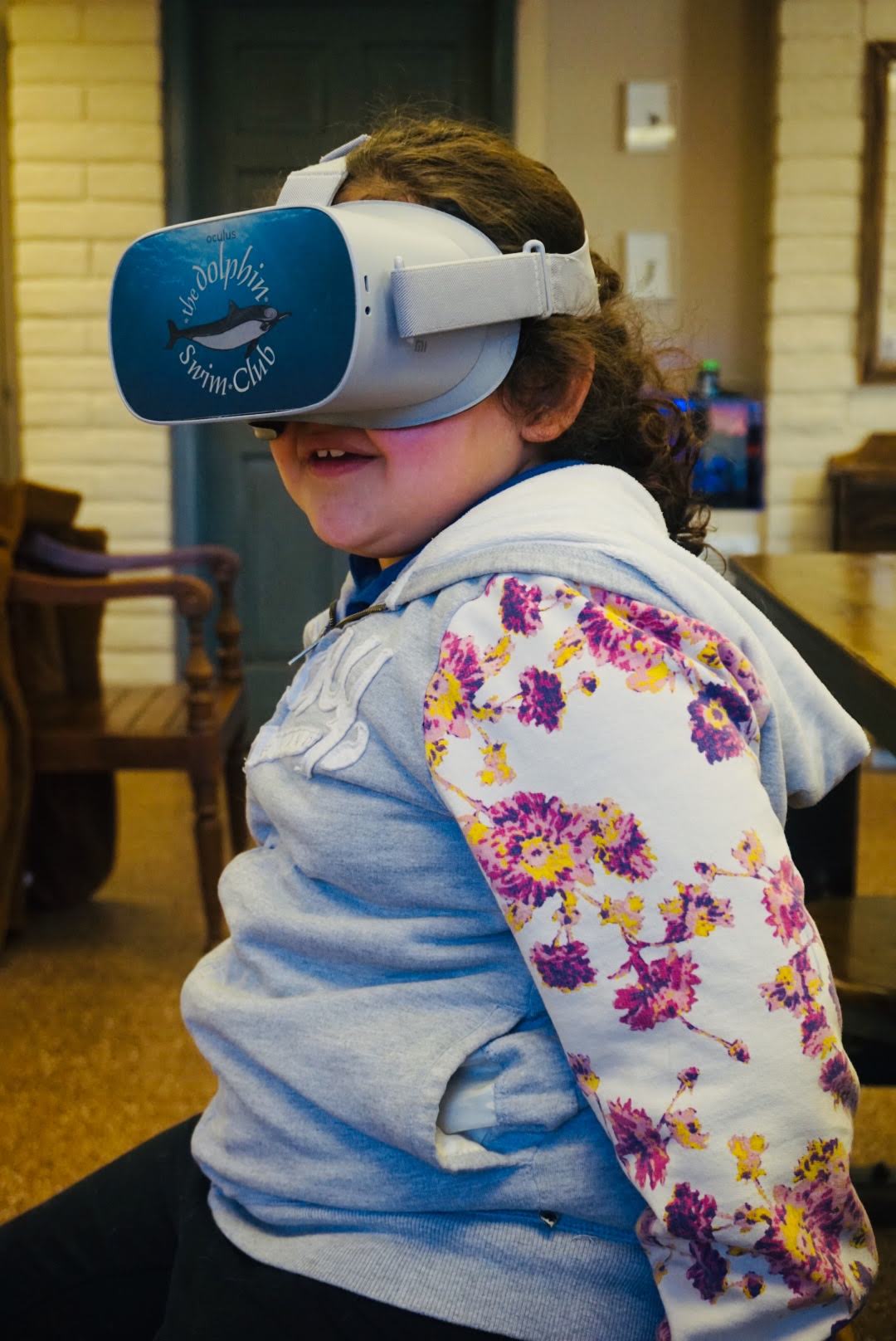
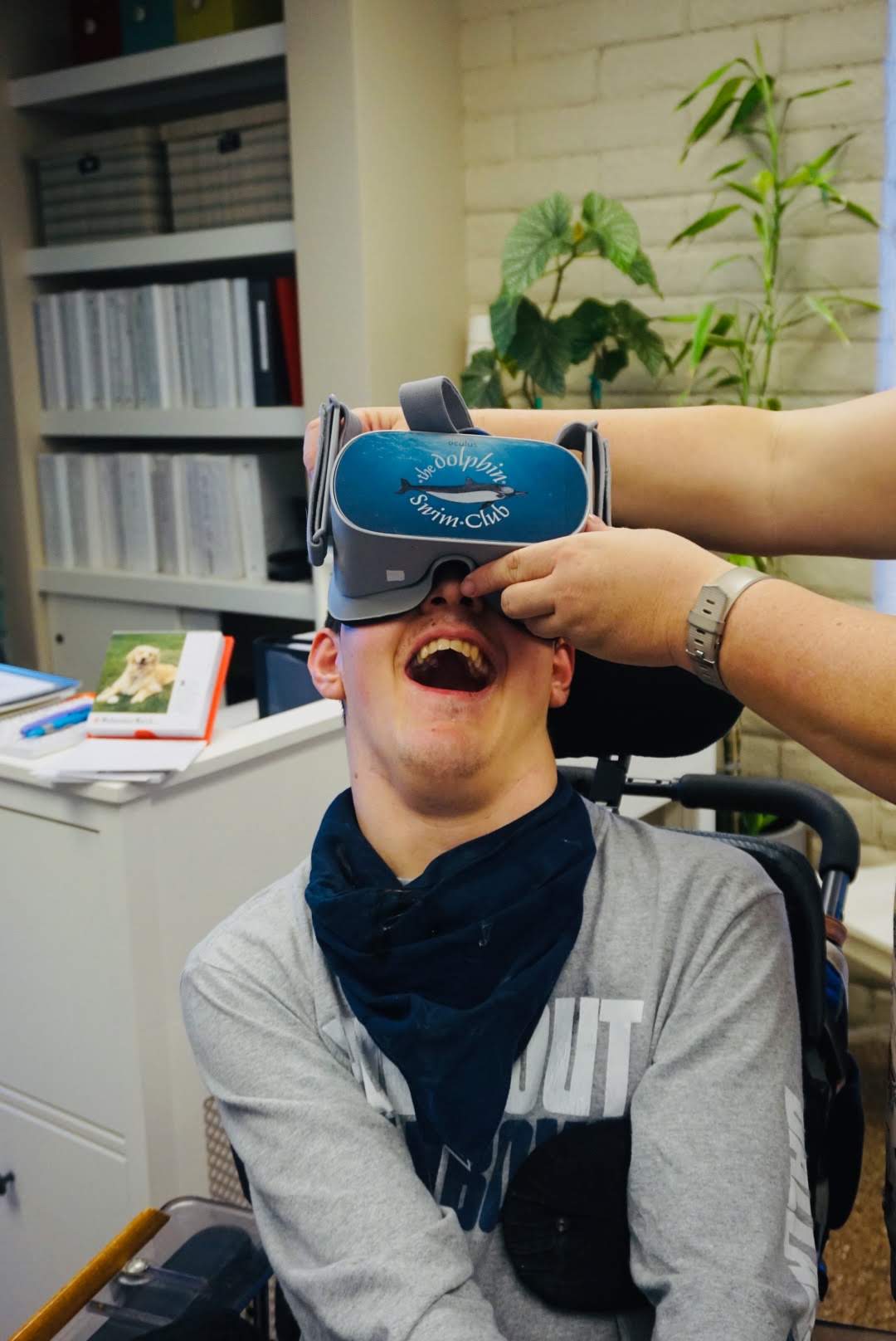
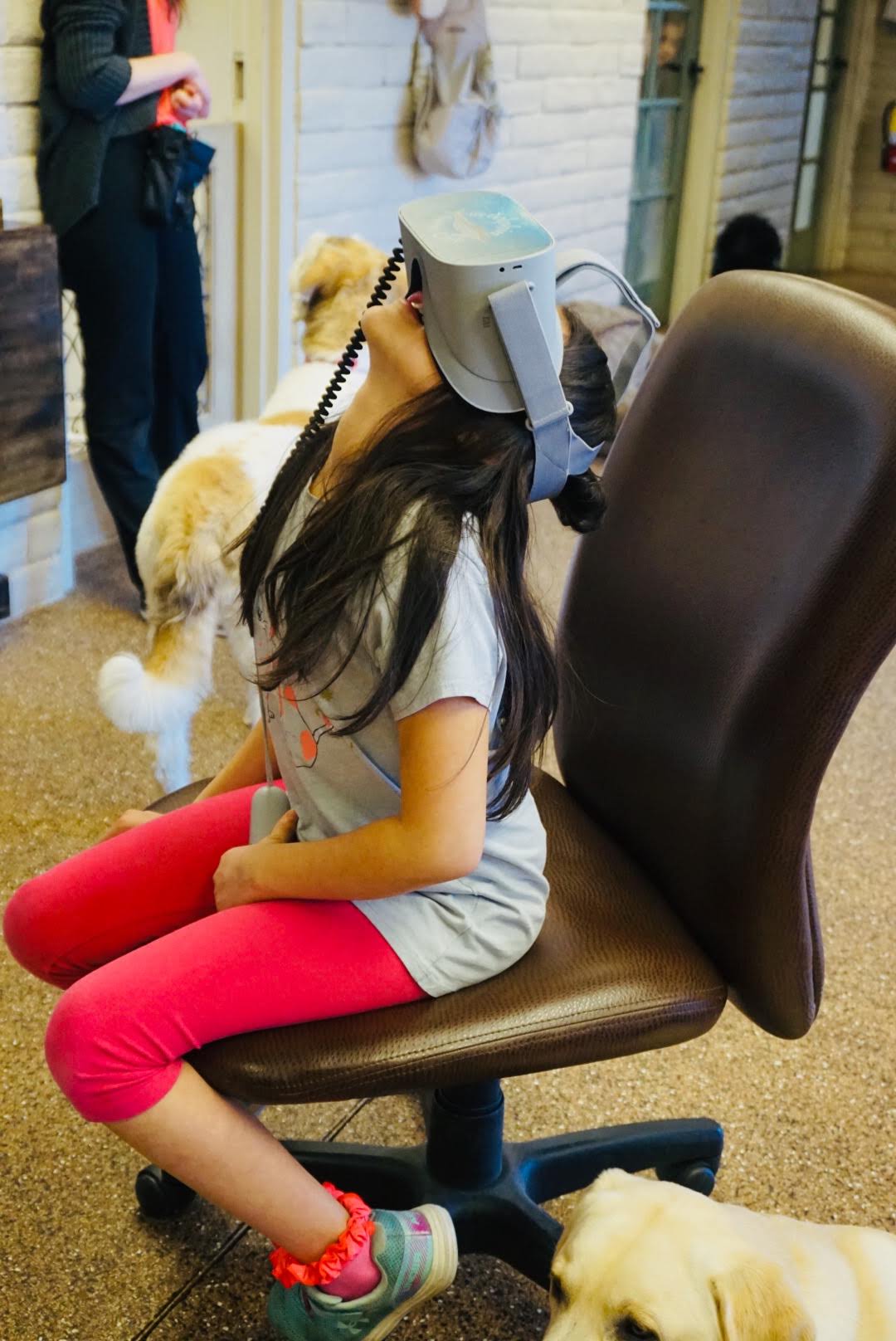
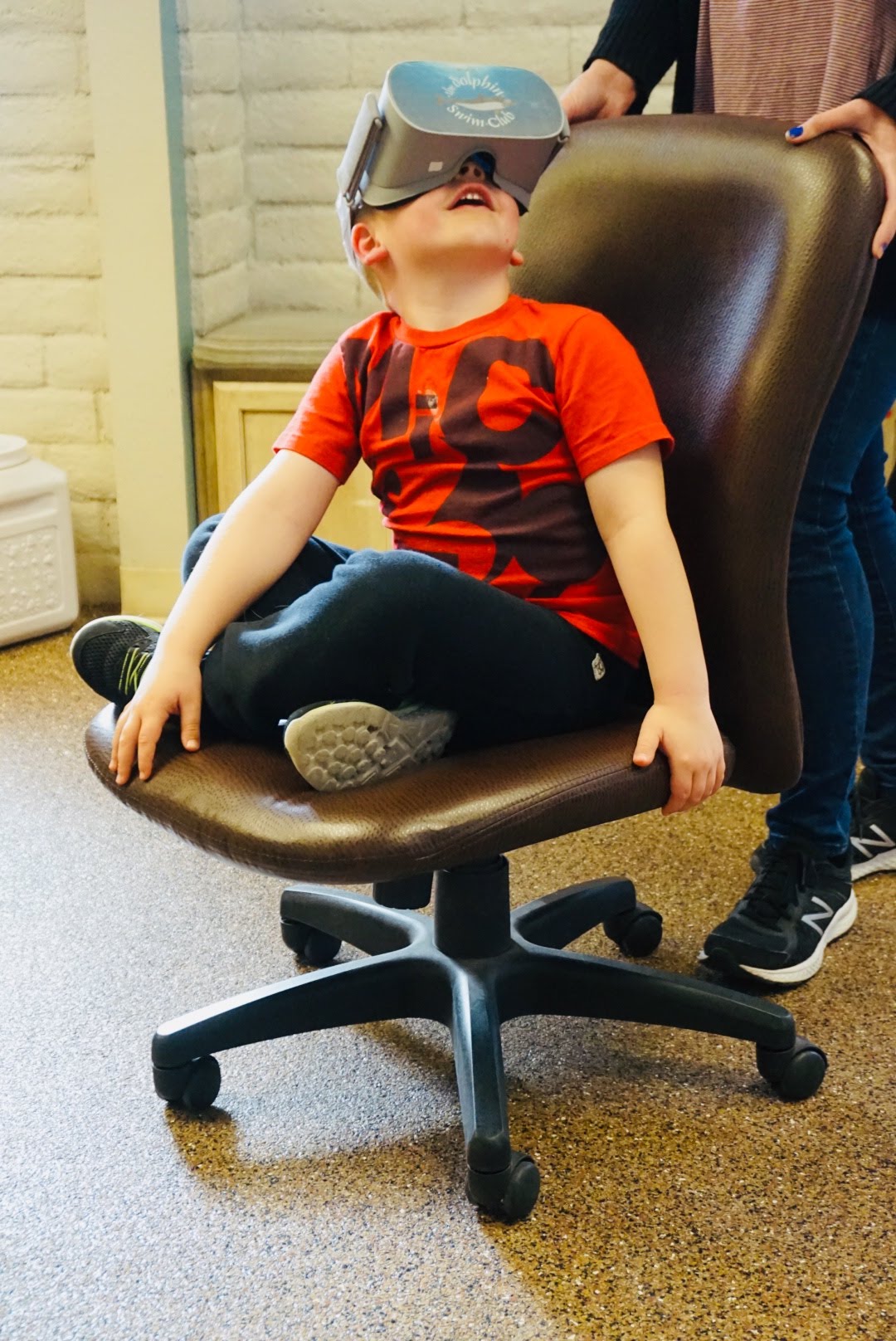
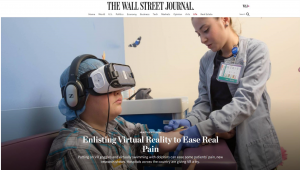 Today was a big day for the Dolphin Swim Club because we made it to one of the most influential and wide-read magazines worldwide. We are delighted to share
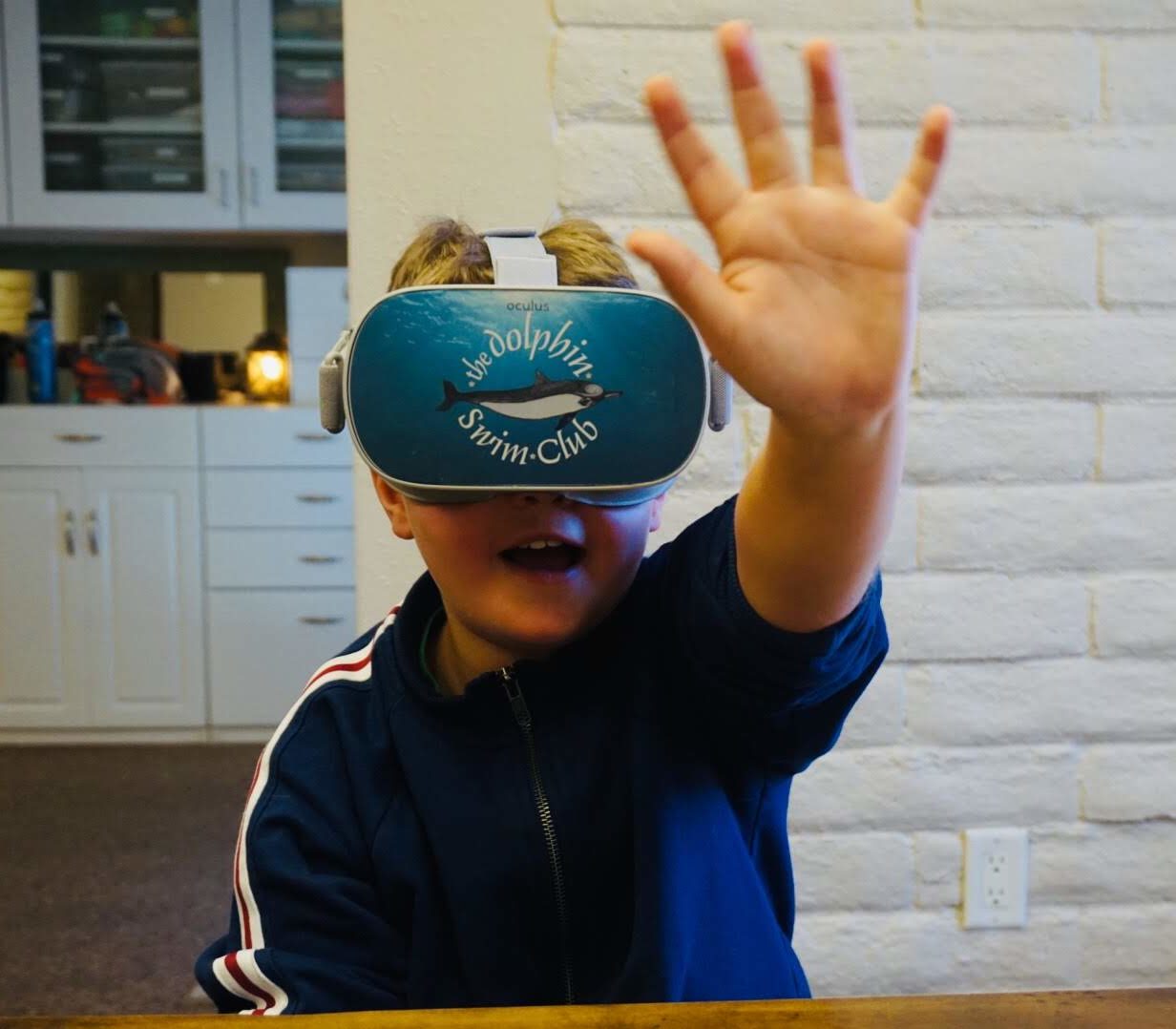
  These days, Virtual Reality is used more and more for medical purposes. An example of one of these applications is to relieve pain. Due to the immersive power of virtual reality, patients experience less pain. This may lead to less use of medication and thus improve patient well-being. And of course, a drug-free medicine has no environmental impact! Which is great news for our wild dolphin friends. We are excited that Dutch newspaper NRC once again mentioned us in this article about the use of VR in the medical world.
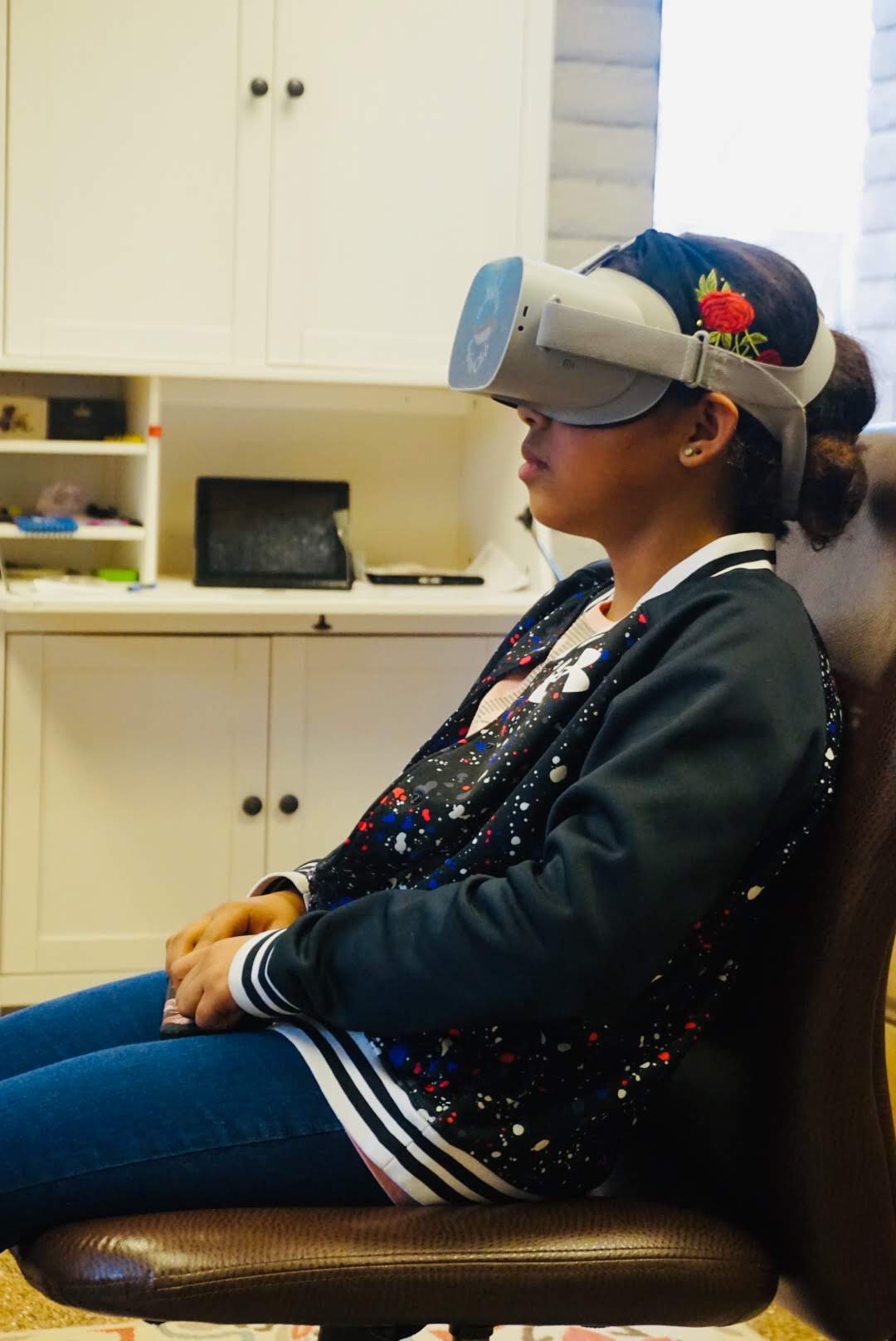
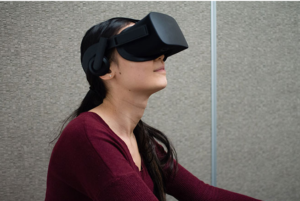 Lauren Schneider, clinical assistant professor of child and adolescent psychiatry at Lucile Packard Children’s Hospital Stanford, is exploring the impact of VR therapy in a pilot study called
 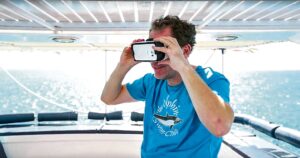 Recently, the psychiatric patients admitted to the University Medical Hospital in Groningen (UMCG), can swim with “wild” dolphins. The footage of the Dolphin Swim Club is used in their treatment of depression, psychosis and anxiety disorders. Psychiatrist Wim Veling: ‘Patients with psychological problems often have difficulties to relax. Stress enhances a lot of these psychological problems. This VR experience helps to reduce stress by immersing patients in a serene underwater environment surrounded by dolphins.’
 Last September, we flew to Los Angeles to present our project at a conference about Virtual Reality in pain management. The conference was organised by the MayDay Fund in collaboration with Stanford University. “PCMag got a quick live demo before they went onstage, and it’s beautiful. After a sudden immersion into cool waters, wild dolphins swim so close you feel as if you could touch them. A few moments amongst the palliative soothing melange of sonar clicks from the dolphins and sensuous deep seascape sounds, and dopamine and serotonin levels do rise significantly. You can see why this is gathering traction with Nordic healthcare professionals like the Norwegian Cancer Society.”
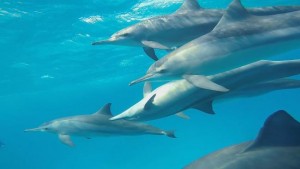 Swimming with wild dolphins in Virtual Reality as a therapy for patients suffering from, for example, autism or depression. The idea comes from the artist Marijke Sjollema, from Leeuwarden in the Netherlands. She set off to film wild dolphins in Egypt in 2015. The University Medical Centre Groningen (UMCG) embraced the project immediately. The hospital starts with a study of the effects of this new drug free medicine.
 The hospital UMCG in Groningen shows interest in the Virtual Reality project of the Dolphin Swim Club. They have developed a programme that makes it possible to actually swim with dolphins. The art project also has a scientific impact. Swimming with dolphins is sometimes used as a form of therapy, especially for autism and depression. The content of the Dolphin Swim Club is filmed so realistically, patients feel as if they truly swim with the dolphins and that should have a positive effect on the treatment. The UMGC will investigate the results of the programme over the next two years.
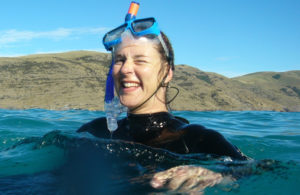 Swimming with wild dolphins. This activity tops the bucket list of many people. The Dolphin Swim Club developed Virtual Reality goggles to make this possible from the comfort of your own home. The project helps fund scientific research into Virtual Reality applications in healthcare.