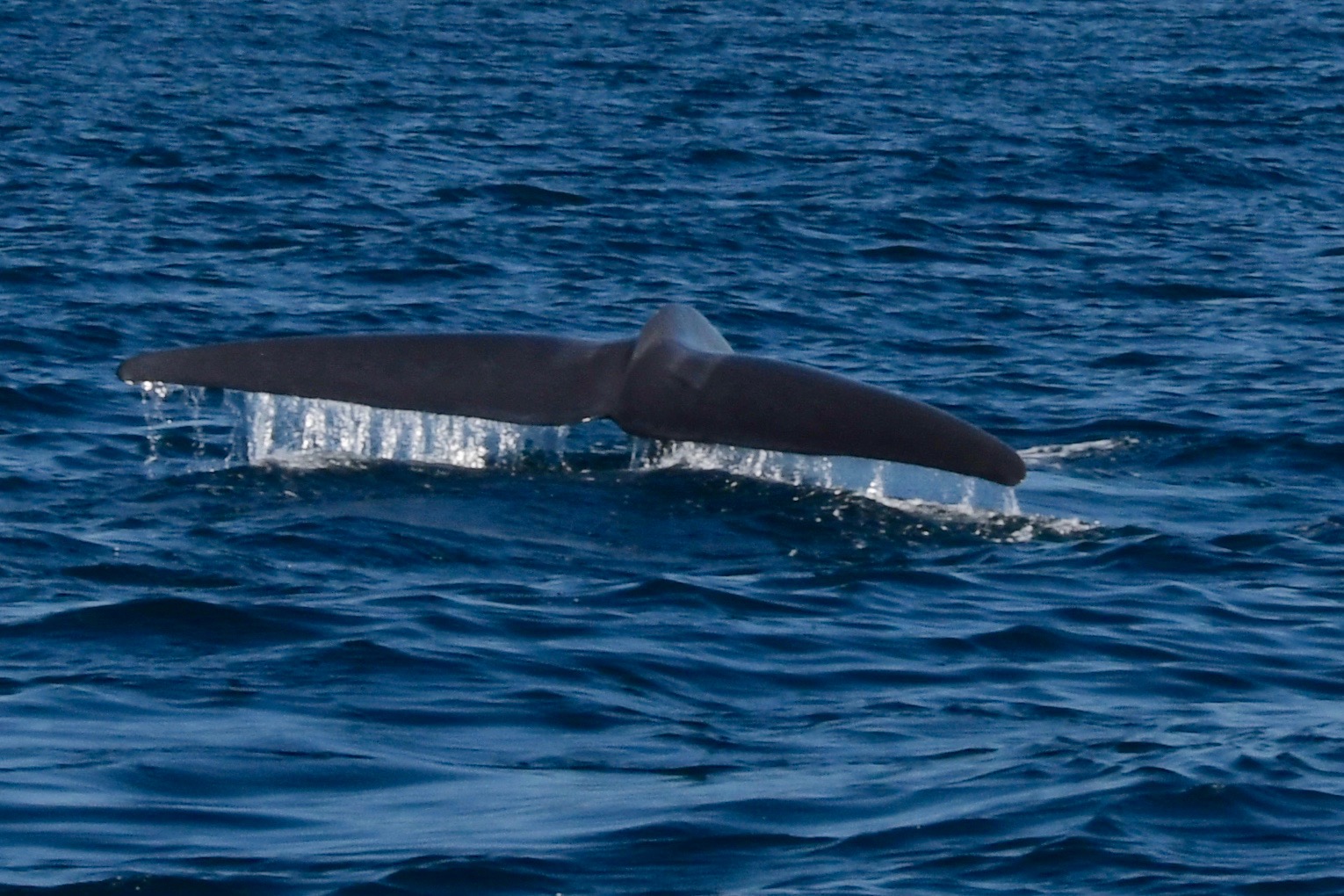
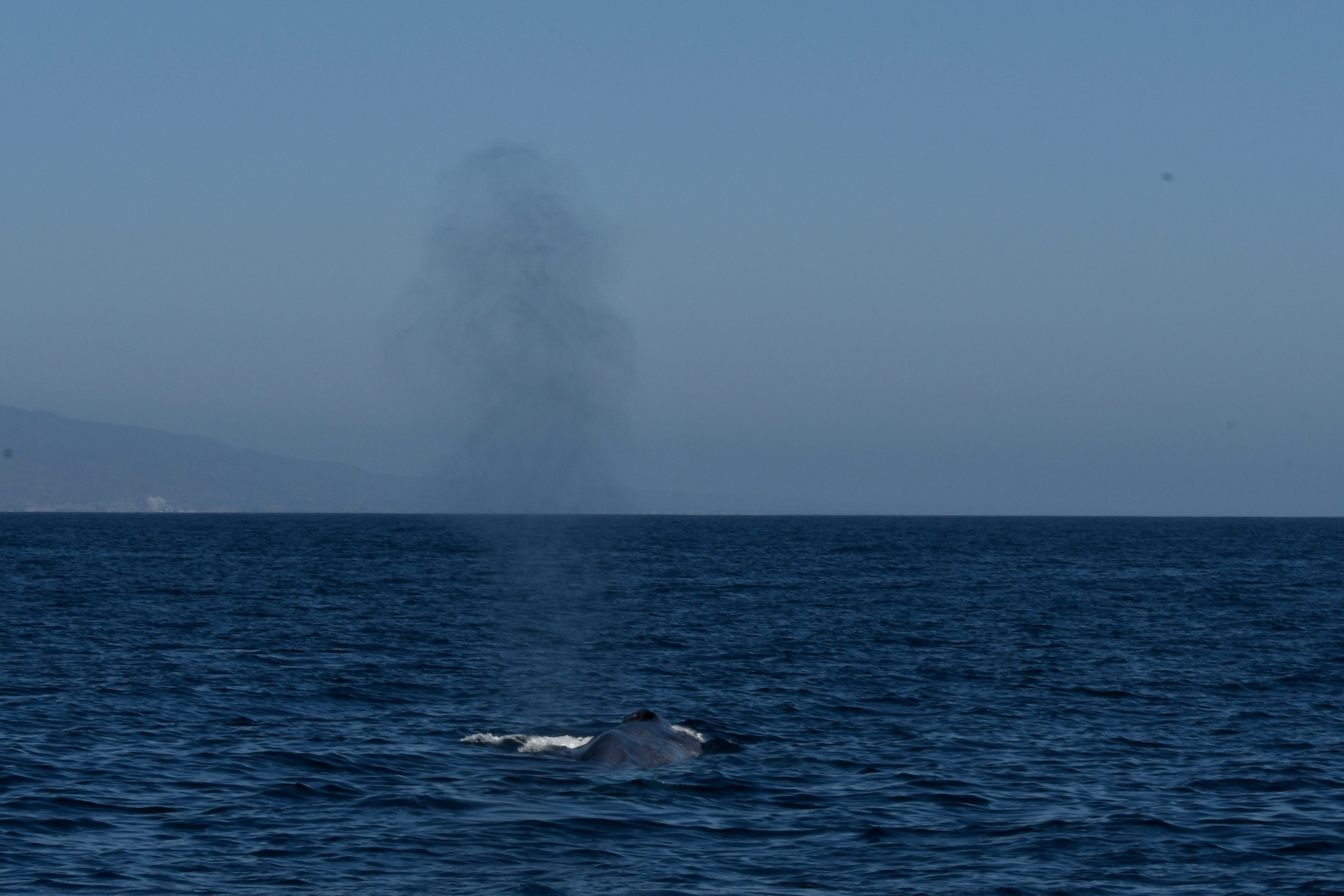
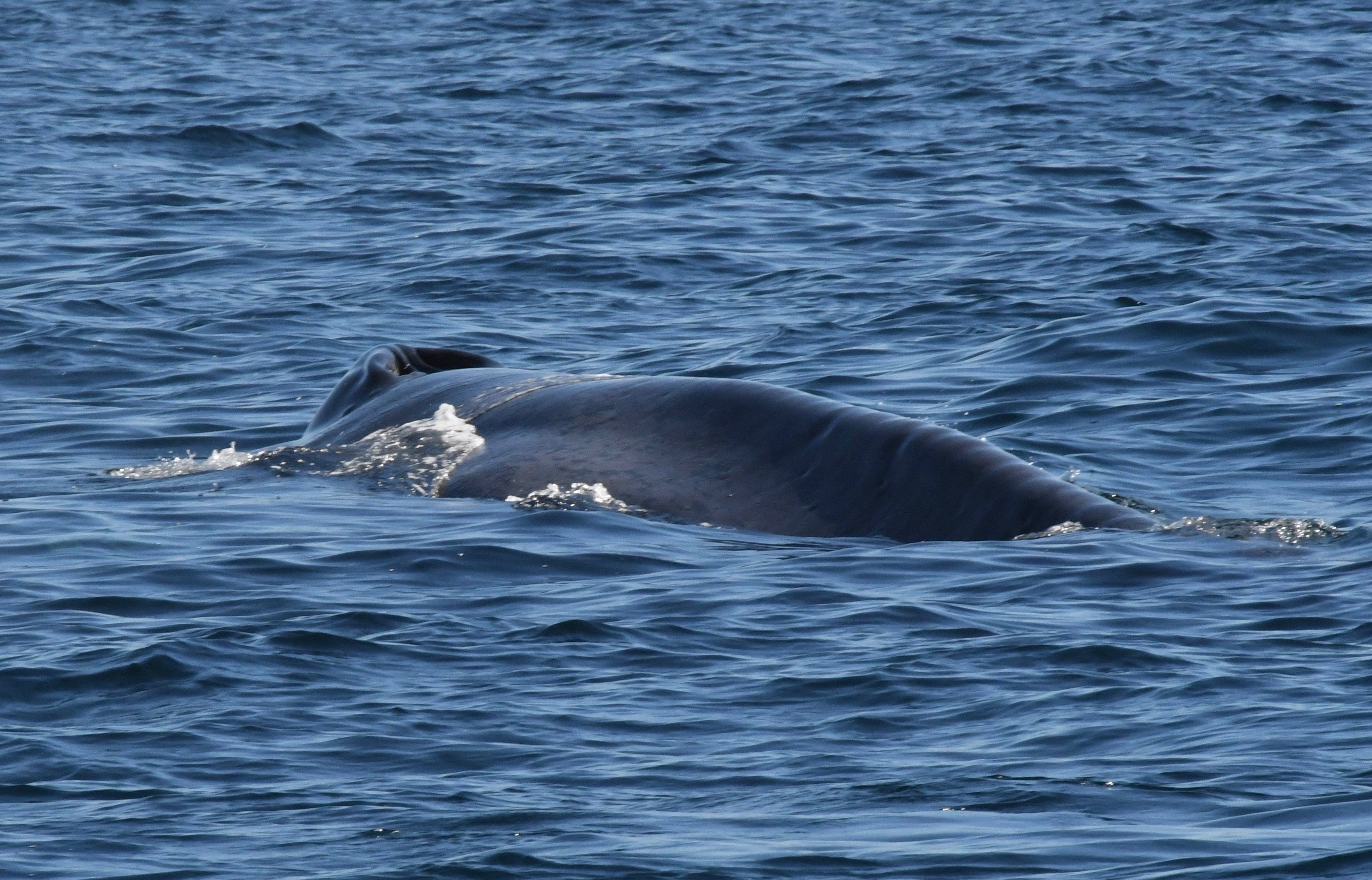
September 15th 2016…
Off the coast of Dana Point, California.
Meeting for the first time, the incredible amazing Blue Whale.
Bigger than any creature that has ever lived on our planet. A Gentle Giant, we are in awe.
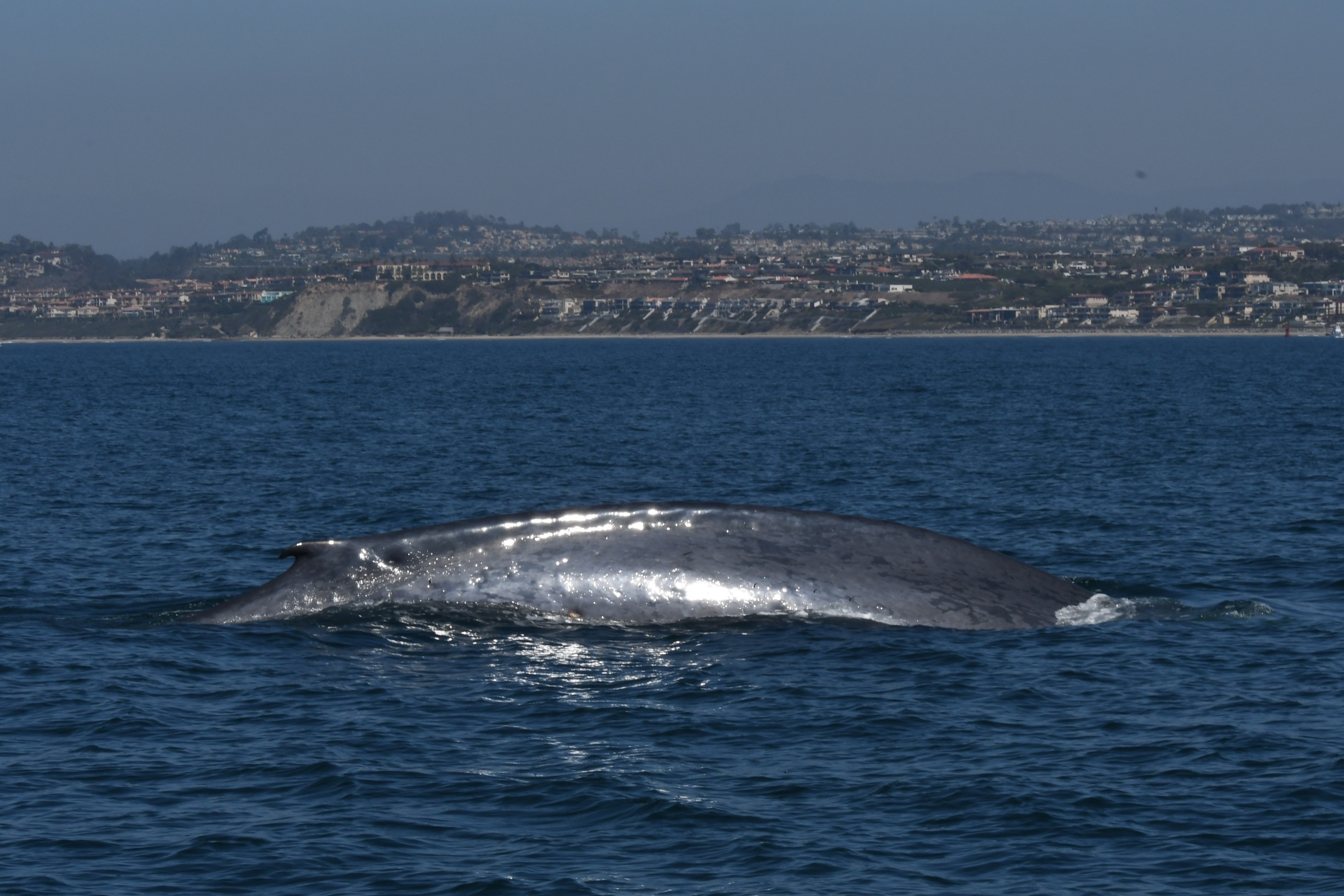
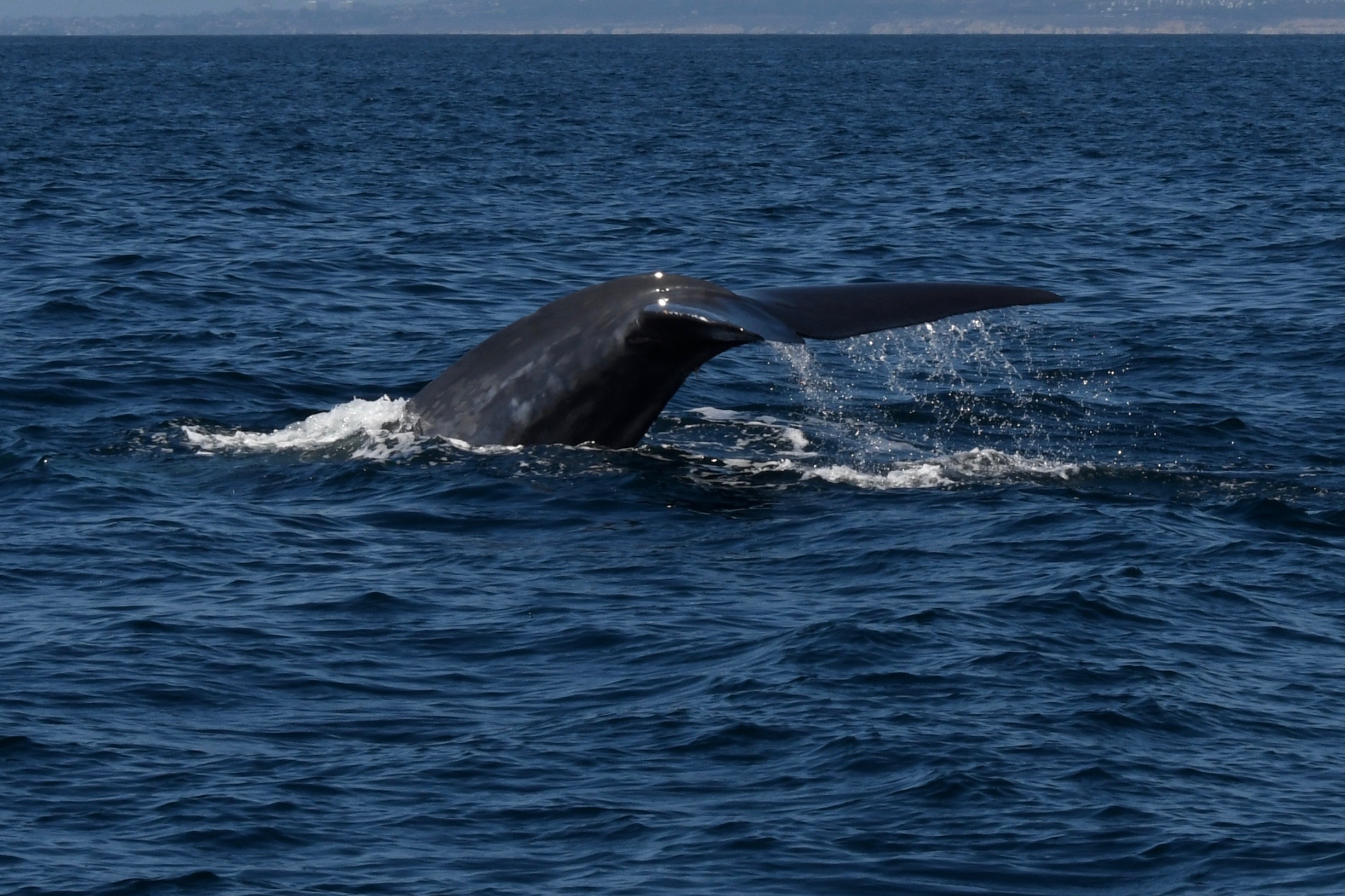
The biggest heart in the world is inside the blue whale. It weighs more than seven tons.
It’s as big as a room. It is a room, with four chambers. A child could walk around in it, head high,
bending only to step through the valves. The valves are as big as the swinging doors in a saloon.
This house of a heart drives a creature a hundred feet long. When this creature is born it is twenty
feet long and weighs four tons. It is way bigger than your car. It drinks a hundred gallons
of milk from its mama every day and gains two hundred pounds a day, and when it is seven
or eight years old it endures an unimaginable puberty and then it essentially disappears from
human ken, for next to nothing is known of the mating habits, travel patterns, diet, social life,
language, social structure, diseases, spirituality, wars, stories, despairs, and arts of the blue whale.
There are perhaps ten thousand blue whales in the world, living in every ocean on earth, and of
the largest mammal who ever lived we know nearly nothing. But we know this: the animals
with the largest hearts in the world generally travel in pairs, and their penetrating moaning cries,
their piercing yearning tongue, can be heard underwater for miles and miles.
Mammals and birds have hearts with four chambers. Reptiles and turtles have hearts with
three chambers. Fish have hearts with two chambers. Insects and molluscs have hearts with
one chamber. Worms have hearts with one chamber, although they may have as many as
eleven single-chambered hearts. Unicellular bacteria have no hearts at all; but even they have
fluid eternally in motion, washing from one side of the cell to the other, swirling and whirling.
No living being is without interior liquid motion. We all churn inside.
So much held in a heart in a lifetime. So much held in a heart in a day, an hour, a moment.
We are utterly open with no one, in the end — not mother and father, not wife or husband,
not lover, not child, not friend. We open windows to each but we live alone in the house of
the heart. Perhaps we must. Perhaps we could not bear to be so naked, for fear of a constantly
harrowed heart. When young we think there will come one person who will savour and sustain
us always; when we are older we know this is the dream of a child, that all hearts finally are bruised
and scarred, scored and torn, repaired by time and will, patched by force of character, yet fragile
and rickety forevermore, no matter how ferocious the defence and how many bricks you bring to
the wall. You can brick up your heart as stout and tight and hard and cold and impregnable as
you possibly can and down it comes in an instant, felled by a woman’s second glance, a child’s
apple breath, the shatter of glass in the road, the words “I have something to tell you,” a cat with a
broken spine dragging itself into the forest to die, the brush of your mother’s papery ancient hand
in the thicket of your hair, the memory of your father’s voice early in the morning echoing from
the kitchen where he is making pancakes for his children.
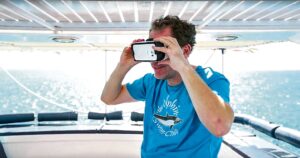
 The hospital UMCG in Groningen shows interest in the Virtual Reality project of the Dolphin Swim Club. They have developed a programme that makes it possible to actually swim with dolphins. The art project also has a scientific impact. Swimming with dolphins is sometimes used as a form of therapy, especially for autism and depression. The content of the Dolphin Swim Club is filmed so realistically, patients feel as if they truly swim with the dolphins and that should have a positive effect on the treatment. The UMGC will investigate the results of the programme over the next two years.
 Swimming with wild dolphins. This activity tops the bucket list of many people. The Dolphin Swim Club developed Virtual Reality goggles to make this possible from the comfort of your own home. The project helps fund scientific research into Virtual Reality applications in healthcare.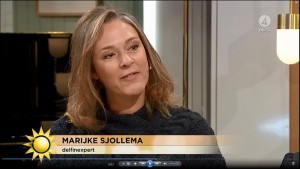
 One of Marijke’s greatest interests is to travel the world and swim with dolphins. On Monday she did just that at the docks in Pataholm (Sweden). Marijke’s voice cannot hide the joy when she tells about Monday’s event.“We’re still a little shocked. It was almost a little magical feeling”, she says. It was last week that she first found out that dolphins were seen outside Pataholm. She and her husband hurried there to take several nice pictures of the carefree dolphins. On Monday, she found out that the dolphins were seen at Pataholm again. “The weather was clear and fine and the dolphins came in the giant jetty. I took the opportunity and jumped into the water”, says Marijke Sjollema.“I think I was with them for an hour. They swam around and I heard their click sound in the water when they communicated.”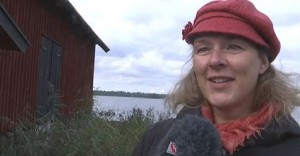
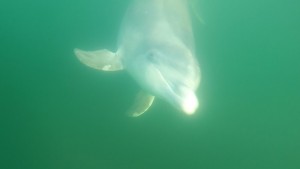 Dutch newspaper De Telegraaf reports on swimming with dolphins as a popular tourist attraction. “Swimming with dolphins is a fun activity, but do the animals enjoy it as well? Most people agree that at least wild dolphins can decide to swim away if they are not in the mood to play. But what about so-called dolphin-assisted therapies for children suffering from down syndrome or autism? The Dolphin Swim Club aims to offer an animal-friendly alternative, made possible through a new Virtual Reality technology. The organisation has just launched a fundraiser on Kickstarter.”